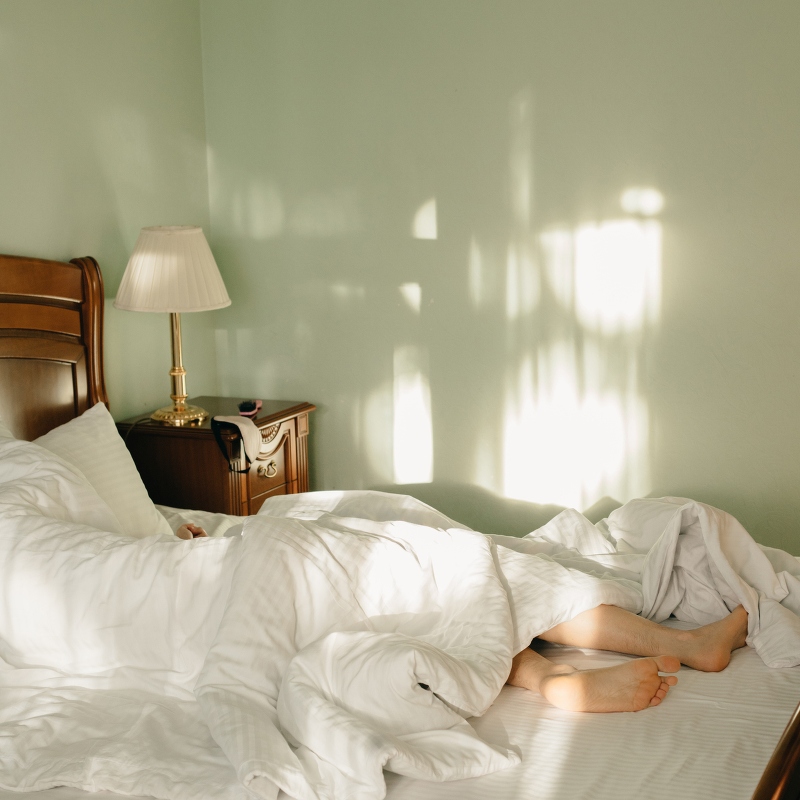
Getting adequate sleep has been a challenge throughout my life, and I’ve learned firsthand how the lack of good sleep hygiene can impact our waking hours. During my last year of college, I had to work two jobs to support myself. This caused me to stay up at night to do my homework. As a result, I slept during the day, even while in class.
Later, I moved to Washington, D.C., and was so inspired and stimulated by my surroundings and opportunities that I restricted my sleep to six hours a night. No wonder I was so tired! As I’ve aged and wisened, I know I’m going to miss out, and that is perfectly fine. In fact, without enough sleep, I’m likely to miss what is right in front of me. I want to deepen my ability to be well and aware, so sleep has become more important—I know in my bones it is difficult to maintain without intentionality.
In my work as a pastoral counselor and spiritual care scholar, I also see the connections between rest and wellbeing in others. In the worst case scenarios, the prolonged loss of sleep can be both a symptom and a cause of very serious mental and physical health conditions. I witnessed this first-hand in my family.
My mother has always been known to be quite vivacious. Her friends would often joke that my mother was probably “in the streets”—on her way to her sewing group, or visiting friends or relatives, or going to a movie or shopping. She was a woman on the go. However, when I lived with her after college, she began to complain about losing sleep. Sleeplessness became such a problem that she stopped going out or talking to friends on the phone, and insisted that the blinds be closed to prevent sunlight from entering the living room. She lost her appetite and a significant amount of weight, and refused to go to the doctor. Eventually, she was hospitalized and diagnosed with Major Depressive Disorder. Consequently, I take sleep very seriously. I hope you will too.
Here are some reflections, mantras, and a vow I’ve used to support this intention:
- A good night’s sleep makes the experience of everything else so much better.
- It’s better to fully experience the life that I live than to worry about missing out on the lives others live.
- I remember how bad it feels to be awake and exhausted, and I prefer to feel good and energetic.
- Reflecting on the Buddhist Five Remembrances on the nature of life and death strangely settles me: I am of the nature to age, become ill, die, and will be separated from all I treasure. I am the owner and heir of my actions. Along with this I add: I am not separate from my parents’ biology and chemistry. I am of the nature to experience sleeplessness and depression.
- I make a vow: Don’t go too long without sleep before checking in with a doctor
I also want to acknowledge that the conditions of this world are often not supportive for rest, so being unable to get proper sleep is not necessarily a personal failing. As with any positive habit we’re hoping to establish or encourage, we need to be realistic of the conditions, and practice diligence and fierce self-compassion in the process.
The most important lesson I’ve learned about sleep hygiene is surprisingly simple: it starts with when you wake up—not when you go to bed. While working as a clinical pastoral counselor with patients experiencing a variety of mental health challenges, I received this life-changing advice from the medical director. I thought that good sleep hygiene was getting to bed at the same hour, so I tried to force myself to go to bed early, becoming frustrated in the process, and waking up tired. That simple change to focusing on the time to wake up helped me make the shift.
I’ve also learned that my own sleep is improved by hydrating throughout the day and eating the final meal of the day at least two to three hours before bed. If you live with others, let them know how you’d like to prepare for bed, and that you’d like them to support you. This could mean lowering the volume on noise, delaying unnecessary requests until another day, or checking to see if everyone who is dependent on you has what they need. You can also thank them for being in your life, and wish them a good night’s rest. Take a moment to consider what supports you, and how you might ask for support. This might be challenging to consider, so let yourself be creative and open to possibility.
Our bodies are living miracles, and we honor them by offering care throughout the day, and supporting them with rest. I wish you well in committing to your own sleep hygiene, and hope these reflections and practices can be of benefit.